
If you were to plot the different bond maturities and yields on a graph you would get what is commonly referred to as a "yield curve". The shape of this curve says a lot about the economy -- where it is and where it's headed.
> Glossary
> Support
|
|
|
|
|
|
|
| The Yield Curve
If you were to plot the different bond maturities and yields on a graph you would get what is commonly referred to as a "yield curve". The shape of this curve says a lot about the economy -- where it is and where it's headed. |
> Home
> Glossary > Support |
|||||
|
||||||
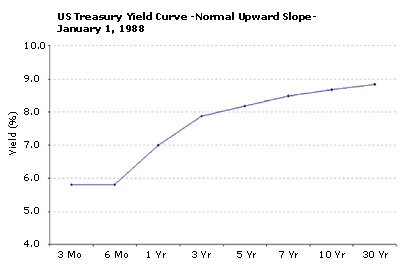
| Gentle upward slope: Under "normal circumstances" the curve will slope upward, because long-term bonds will pay higher yields than shorter-term ones. This reflects investor confidence that the economy will continue to grow at a "normal" rate, and that the usual spread of 3 percent between long-term and short-term bond rates will hold steady. | ||||||
|
||||||
|
|
||||||
|
||||||
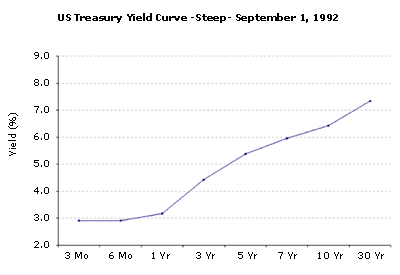
| Steeper than usual: This typically indicates the beginning of an economic boom. Long-term investors seek rates higher than the normal 3 percent spread over short-term rates, because they believe rates will go up considerably in the near term. Investors in short-term bonds will be able to reinvest at the higher rates, and long-term bondholders want the same possibility. | ||||||
|
||||||
|
|
||||||
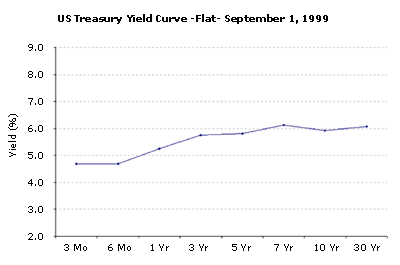
| Flat: A flat curve, or one that is slightly raised in the middle, may indicate a coming recession. Long-term investors are willing to settle for less because they believe the future holds even lower short-term interest rates, and they want to lock in a "good" rate while they can. | ||||||
|
||||||
|
|
||||||
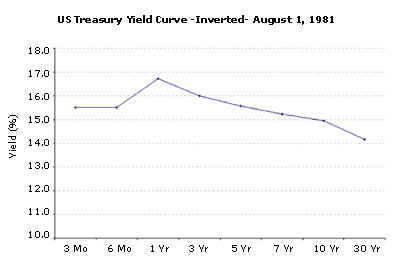
| Inverted: Long-term investors will accept rates that are lower than short-term ones if they believe the bottom is going to fall out of the market. Better to lock in a low rate now than be faced with an even lower rate in 6 months. | ||||||
|
||||||
|
|
||||||
|
|
|
|
|
|
|
|
|
|
|
|
|
|
Previous |  |
Next |
|
||||
 |
|
|
|
|
|
||||
| © 2026 Morningstar Investment Management LLC | ||||
|
||||
|
||||