
| Fun with Compounding continued... |
| Because the benefits of compounding increase over time, the importance of starting early with an investment program cannot be overstated. |
|
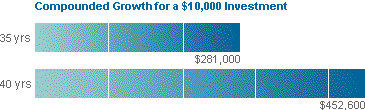
| For example, say you are 25 years old, and you invest $10,000 in a mutual fund that returns 10% a year on average. Your best friend, who is the same age as you, invests $10,000 in the same mutual fund five years later, at the age of 30. By the time you both retire at age 65, your investment would be worth approximately $452,600. Your friend's investment, however, will be worth only $281,000. Your investment period was less than 15% longer, but your final portfolio value ended up being more than 60% larger. |
|
 |
|
| There are no earth-shattering conclusions to be reached, other than those that have been preached for decades. The first is that time can be the greatest ally of any investor. Just a few additional years can make a huge difference in the value of your portfolio. The second point to consider is that management fees and investment expenses take a huge toll on your investments. Carefully consider what you're paying for--what seems like an insignificant amount on an annual basis won't be so insignificant 30 years from now. |
|
| The power of compounding is obviously on the mind of the country's most successful investor, Warren Buffett. In Buffett: The Making of an American Capitalist, Roger Lowenstein reveals that the Omaha sage is not only concerned with current costs, but also the future value that they represent. In the 1960s, when Buffett was already a multimillionaire, his wife spent $15,000 on home furnishings. Buffett later groused to a friend "Do you know how much that is if you compound it over twenty years?" |
|
| Well, let's see. According to Lowenstein, Buffett has compounded Berkshire Hathaway's money at about 28% a year: |
|
| $15,000 x (1.28)20= $2,090,700 |
|
| Let's hope they didn't buy leopard prints. | |
|
|
> Home
> Glossary > Support |

